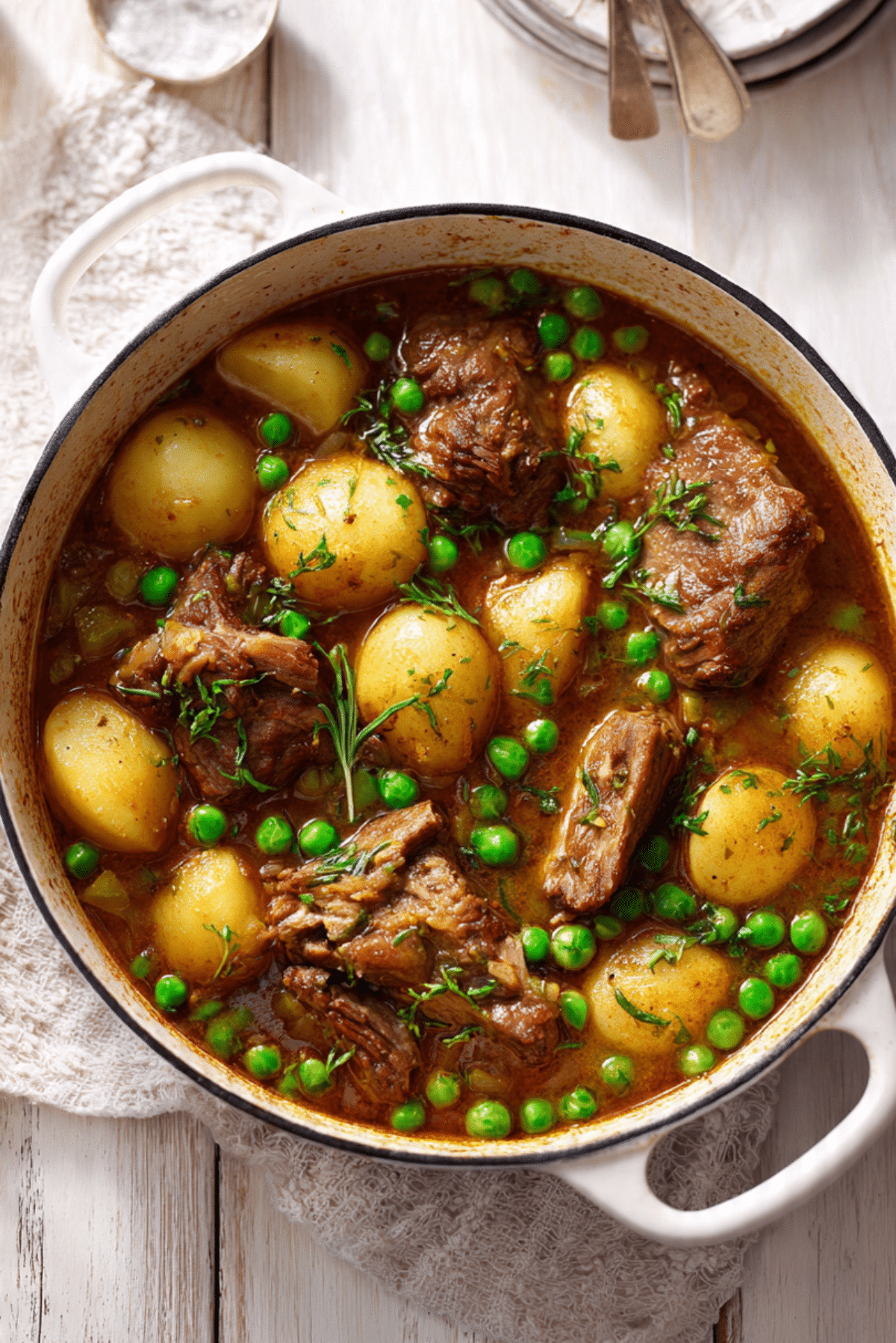
Lamb Pea Stew
There is something deeply comforting about a pot of Lamb Pea Stew gently bubbling away on the stove. The aroma alone, rich lamb mingling with sweet peas and tender potatoes, fills the kitchen with that slow cooked warmth that makes everyone wander in and ask, “Is it ready yet?” Trust me, you’re going to love this. It is hearty, rustic, and the kind of dish that feels like it has been passed down for generations.
A Bowl of Comfort That Feels Like Home
Some meals are flashy, and some are quiet heroes. This stew is the second kind. It does not try too hard, yet every spoonful is layered with flavor. The lamb becomes fork tender, the potatoes soak up that savory broth, and the peas add tiny pops of sweetness that balance everything beautifully.
As the broth thickens and the ingredients melt together, the kitchen starts to smell like pure comfort. Let me tell you, it is worth every bite. And now that you can almost taste it, let’s take a little step back and see where this style of cooking comes from.
A Rustic Tradition Rooted in Simplicity
Lamb based stews have long been a staple in many rural regions, especially in Mediterranean and Middle Eastern kitchens where lamb is celebrated for its rich flavor. Peas and potatoes were often added because they were affordable, nourishing, and easy to grow.
This kind of stew was traditionally cooked slowly over low heat, allowing tougher cuts of meat to transform into something tender and deeply flavorful. It is humble food, built on patience and simple ingredients, which is exactly why it continues to stand the test of time.
Why This Stew Never Fails You
Before we dive into the details, let me tell you why this one is such a keeper.
Versatile: You can serve it as a main dish with bread, or spoon it over rice for something extra filling. It adapts beautifully to what you have on hand.
Budget-Friendly: Using bone in lamb pieces adds incredible flavor without needing expensive cuts.
Quick and Easy: While it tastes like it simmered all day, the hands on work is surprisingly simple.
Customizable: You can adjust seasoning, add herbs, or slightly vary the vegetables without losing its soul.
Crowd-Pleasing: It is hearty enough for big appetites and comforting enough for picky eaters.
Make-Ahead Friendly: In fact, it tastes even better the next day once the flavors deepen.
Great for Leftovers: The texture holds up beautifully, making reheating effortless.
And now that you are convinced, let’s talk about how to make it truly exceptional.
Chef Secrets for Deep, Layered Flavor
A great stew is all about small details that build flavor step by step.
- Brown the lamb well before adding liquid, this creates a rich base.
- Let the onions cook until soft and lightly golden, do not rush this part.
- Simmer gently rather than boiling, low heat keeps the meat tender.
- Add peas toward the end so they stay bright and slightly sweet.
- Taste and adjust salt gradually, especially after the broth reduces.
These little choices make a big difference in the final result.
Essential Tools for a Perfect Simmer
You do not need fancy equipment, but a few good tools help.
Heavy Dutch Oven or Large Pot: Distributes heat evenly and keeps the stew at a steady simmer.
Sharp Knife: Makes prepping vegetables and trimming lamb easier and safer.
Wooden Spoon: Ideal for stirring and scraping up flavorful bits from the bottom.
Ladle: For serving generous, comforting portions.
Now let’s gather everything that goes into this pot of goodness.
Ingredients That Build Beautiful Flavor
When these simple ingredients come together, something magical happens. Each one has a purpose, and together they create depth and balance.
- Bone In Lamb Shoulder Pieces: 2 pounds, trimmed of excess fat. This cut becomes tender and rich after simmering.
- Olive Oil: 2 tablespoons. Helps brown the lamb and carries flavor.
- Yellow Onion: 1 large, finely chopped. Adds sweetness and depth.
- Garlic: 3 cloves, minced. Brings warmth and aroma.
- Carrots: 2 medium, sliced. Add subtle sweetness and color.
- Yukon Gold Potatoes: 3 medium, sliced into thick rounds. Soak up broth and add body.
- Green Peas: 1 1/2 cups, fresh or frozen. Provide bright pops of sweetness.
- Tomato Paste: 1 tablespoon. Enhances richness.
- Chicken Broth: 4 cups. Forms the savory base.
- Bay Leaf: 1 leaf. Adds subtle herbal notes.
- Fresh Parsley: 2 tablespoons, chopped. For freshness at the end.
- Salt: 1 1/2 teaspoons, or to taste. Balances all flavors.
- Black Pepper: 1/2 teaspoon. Adds gentle heat.
Flexible Swaps When You Need Them
Sometimes you need to improvise, and that is perfectly fine.
Lamb Shoulder: Lamb leg pieces.
Yukon Gold Potatoes: Red potatoes or russet potatoes.
Green Peas: Diced green beans.
Chicken Broth: Vegetable broth.
Parsley: Fresh cilantro.
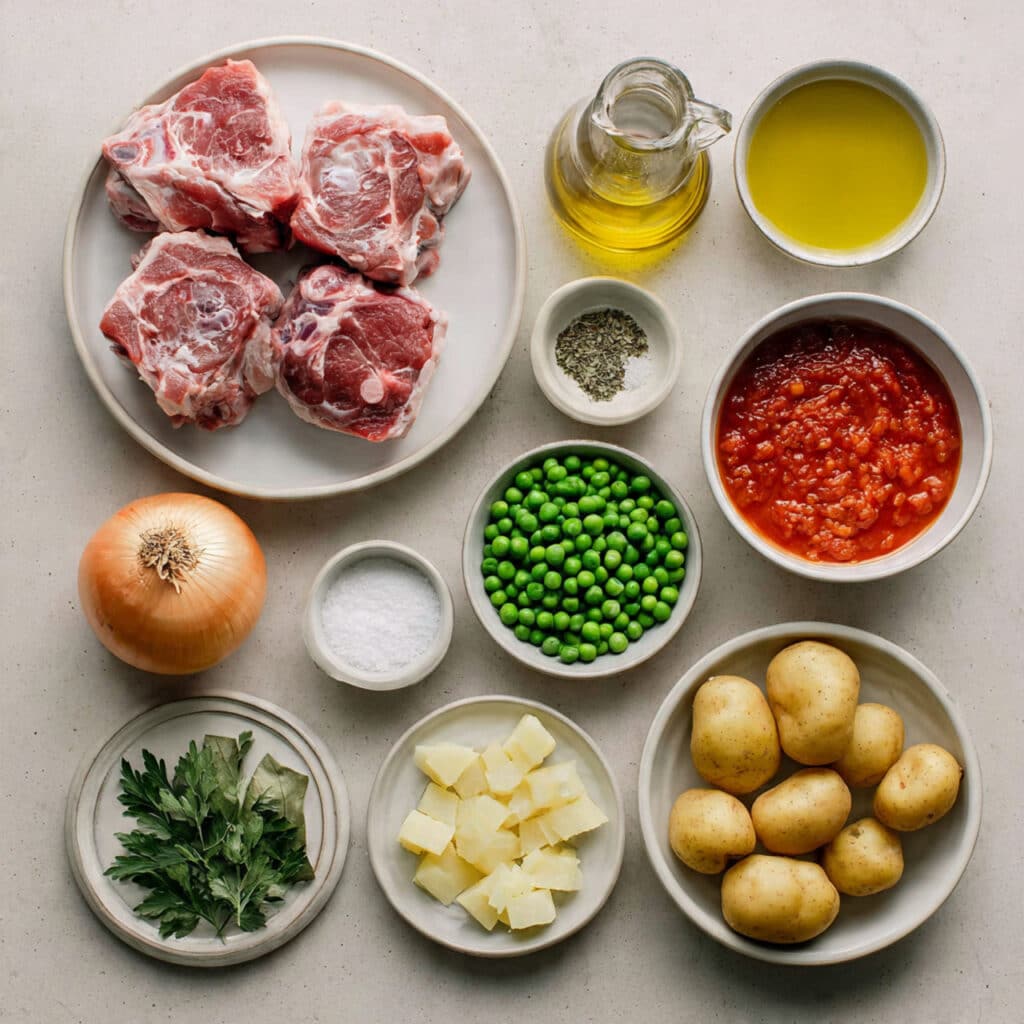
Spotlight on the Stars of the Pot
Some ingredients truly shine here.
Bone In Lamb Shoulder: This cut becomes incredibly tender and releases deep savory flavor into the broth.
Green Peas: Their natural sweetness brightens the richness of the lamb and keeps the dish balanced.
And now, let’s move into the heart of it all, the cooking process.
Let’s Bring This Stew to Life
This is the part where your kitchen starts to smell amazing.
- Preheat Your Equipment: Place a heavy Dutch oven over medium heat and warm the olive oil.
- Combine Ingredients: Season the lamb pieces with salt and black pepper. Brown them in batches until golden on all sides, then remove and set aside.
- Prepare Your Cooking Vessel: In the same pot, sauté the chopped onion and carrots until softened. Stir in garlic and tomato paste, cooking for about 1 minute.
- Assemble the Dish: Return the lamb to the pot. Add sliced potatoes, bay leaf, and chicken broth. The liquid should mostly cover the ingredients.
- Cook to Perfection: Bring to a gentle simmer, cover, and cook for 1 hour and 15 minutes, stirring occasionally, until the lamb is tender.
- Finishing Touches: Stir in the peas during the last 10 minutes of cooking. Remove the bay leaf and sprinkle with fresh parsley.
- Serve and Enjoy: Ladle into bowls and serve warm, preferably with crusty bread to soak up the broth.
Texture and Flavor in Every Spoonful
As it cooks, the broth thickens slightly from the starch in the potatoes. The lamb turns meltingly tender, almost falling off the bone. Carrots soften into gentle sweetness, and peas remain vibrant and slightly firm.
The flavor deepens with time, savory, slightly sweet, and beautifully balanced. This one is a total game changer on a chilly evening.
Smart Cooking Tips for the Best Results
- Let the stew rest for 10 minutes before serving so the flavors settle.
- Skim excess fat from the surface if you prefer a lighter broth.
- If the stew thickens too much, add a splash of warm broth.
- Taste again just before serving and adjust seasoning if needed.
Avoid These Common Mistakes
- Boiling the stew too hard, which can make the lamb tough.
- Adding peas too early, which dulls their color and sweetness.
- Skipping the browning step, which reduces depth of flavor.
- Cutting potatoes too thin, which can cause them to break apart.
Nutrition Facts at a Glance
Servings: 6
Calories per serving: 420
Note: These are approximate values.
Timing Made Simple
Prep Time: 20 minutes
Cook Time: 1 hour 30 minutes
Total Time: 1 hour 50 minutes
Make Ahead and Store with Confidence
You can prepare this stew a day in advance and store it in the refrigerator for up to 3 days. The flavors actually deepen overnight.
For freezing, let it cool completely, then store in airtight containers for up to 2 months. Reheat gently on the stove over low heat, adding a splash of broth if needed.
Serving Ideas That Elevate the Experience
Serve it with crusty bread, warm flatbread, or fluffy rice. A simple green salad on the side adds freshness. You can even spoon it over mashed potatoes for an extra comforting twist.
Turn Leftovers into Something New
Leftover stew makes a fantastic filling for savory hand pies. You can also shred the lamb and toss it with cooked grains for a hearty bowl. Another idea is reducing the broth slightly and serving it over toasted bread for a rustic open sandwich.
Extra Little Touches That Make a Difference
A squeeze of fresh lemon right before serving brightens everything. A sprinkle of extra chopped parsley adds color and freshness. If you like gentle warmth, add a pinch of paprika while sautéing the onions.
Make It Look as Good as It Tastes
Serve it in a wide shallow bowl so the colorful peas and golden potatoes are visible. Sprinkle fresh parsley on top and let a little broth pool around the edges for that rustic feel.
Variations to Explore
- Add chopped spinach during the last few minutes for extra greens.
- Include a teaspoon of ground cumin for subtle warmth.
- Stir in a spoonful of plain yogurt before serving for creaminess.
- Replace potatoes with chickpeas for a different texture.
- Add diced tomatoes for a slightly tangy profile.
FAQ’s
Q1: Can I use boneless lamb?
Yes, boneless lamb works well, just adjust cooking time slightly if pieces are smaller.
Q2: Can I make this in a slow cooker?
Yes, brown the lamb first, then cook on low for 6 to 7 hours.
Q3: Can I use frozen peas?
Absolutely, add them directly from frozen during the final minutes.
Q4: How do I thicken the broth?
Let it simmer uncovered for a few extra minutes.
Q5: Can I substitute beef?
You can, though the flavor will be different.
Q6: Is this gluten free?
Yes, as long as your broth is gluten free.
Q7: Can I add more vegetables?
Yes, zucchini or green beans work nicely.
Q8: How do I know when lamb is done?
It should be fork tender and easy to pull apart.
Q9: Can I prepare it ahead for guests?
Yes, it reheats beautifully and often tastes better the next day.
Q10: What herbs pair well with this stew?
Thyme and rosemary complement the lamb nicely.
Conclusion
This Lamb Pea Stew is simple, soulful, and packed with flavor that builds with every slow simmering minute. It is the kind of meal that gathers people around the table and keeps them there a little longer. Trust me, once you make it, it will find a permanent place in your comfort food rotation.
PrintLamb Pea Stew
A hearty and comforting lamb pea stew made with tender bone-in lamb, golden potatoes, sweet green peas, and a rich savory broth. Slow simmered for deep flavor, this rustic dish is perfect for cozy family dinners and tastes even better the next day.
Ingredients
- 2 pounds bone-in lamb shoulder pieces, trimmed of excess fat
- 2 tablespoons olive oil
- 1 large yellow onion, finely chopped
- 3 cloves garlic, minced
- 2 medium carrots, sliced
- 3 medium Yukon Gold potatoes, sliced into thick rounds
- 1 1/2 cups green peas, fresh or frozen
- 1 tablespoon tomato paste
- 4 cups chicken broth
- 1 bay leaf
- 2 tablespoons fresh parsley, chopped
- 1 1/2 teaspoons salt, or to taste
- 1/2 teaspoon black pepper
Instructions
- Preheat Your Equipment: Place a heavy Dutch oven over medium heat and warm the olive oil.
- Combine Ingredients: Season the lamb pieces with salt and black pepper. Brown them in batches until golden on all sides, then remove and set aside.
- Prepare Your Cooking Vessel: In the same pot, sauté the chopped onion and carrots until softened. Stir in garlic and tomato paste and cook for about 1 minute.
- Assemble the Dish: Return the lamb to the pot. Add sliced potatoes, bay leaf, and chicken broth. The liquid should mostly cover the ingredients.
- Cook to Perfection: Bring to a gentle simmer, cover, and cook for 1 hour and 15 minutes, stirring occasionally, until the lamb is tender.
- Finishing Touches: Stir in the peas during the last 10 minutes of cooking. Remove the bay leaf and sprinkle with fresh parsley.
- Serve and Enjoy: Ladle into bowls and serve warm with crusty bread or rice.
Notes
- For deeper flavor, allow the stew to rest for 10 minutes before serving.
- If the broth becomes too thick, add a splash of warm broth while reheating.
- This stew tastes even better the next day as the flavors continue to develop.